


Osteoarthritis is a chronic pathology that affects the connective tissue structures of the musculoskeletal system.The disease is characterized by a progressive course with gradual destruction of cartilage tissue.Osteoarthritis is detected in most patients after the age of 65, since one of the reasons for its development is the natural aging of the body.
The onset of degenerative-dystrophic pathology is caused by previous injuries, endocrine and inflammatory diseases, excessive physical activity or, conversely, a sedentary lifestyle.The main symptoms of osteoarthritis are joint pain, swelling and limitation of movement.
To diagnose the pathology, instrumental studies are performed: radiography, arthroscopy, magnetic resonance imaging, CT.Osteoarthritis of the 1st and 2nd severity is treated conservatively with a course of medications, physiotherapeutic and massage procedures and physical therapy.In case of irreversible destructive changes in the joints, surgical intervention is indicated: arthrodesis, endoprosthesis.
Pathogenetic mechanisms
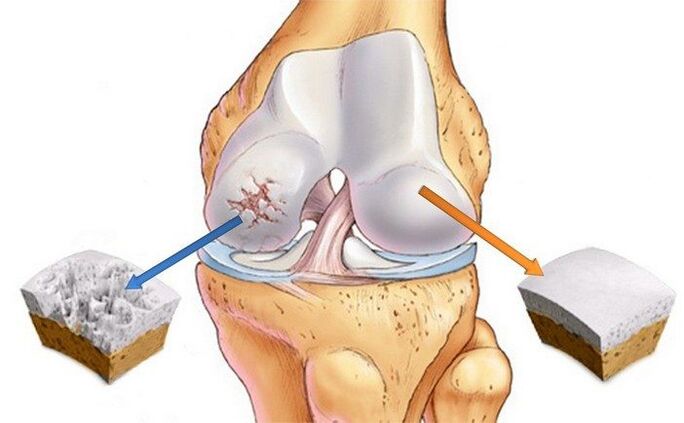
With arthrosis, pronounced changes occur in the internal structures of the connective tissue.Deforming erosions form on cartilaginous tissues, which cause the destruction of collagen fibers, as well as proteoglycans consisting of proteins (5-10%) and glycosaminoglycans (90-95%).As a result, the collagen network loses stability and metalloproteinases begin to be released, destroying all types of extracellular matrix proteins.Destruction is accelerated by increasing the biosynthesis of collagenases and stromelysin.Typically, normal quantitative enzyme values are controlled by cytokines, small peptide information molecules.But as osteoarthritis progresses, the concentration of these proteins decreases, causing the release of a large number of enzymes that damage cartilage tissue.
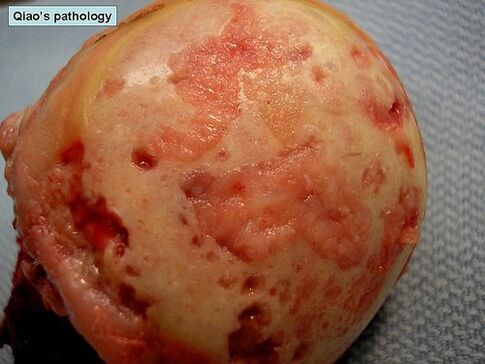
Proteoglycans with an altered structure begin to absorb water molecules that they are unable to retain.Therefore, excess liquid enters the collagen fibers.They “swell” and lose strength and elasticity.Negative changes also occur in the qualitative and quantitative composition of synovial fluid.With arthrosis, the concentration of hyaluron contained in it decreases.The hyaline cartilages no longer receive sufficient nutrients and oxygen for their regeneration.Foci of softening are formed in the cartilaginous tissues, then cracks and specific necrotic growths appear.The bony heads become exposed and begin to suffer microtrauma when moved relative to each other.
Causes and provoking factors
The reasons for the development of primary (idiopathic) arthrosis have not yet been established.It occurs in the absence of provoking factors, therefore theories are put forward about a hereditary predisposition to premature destruction of cartilage.Secondary arthrosis develops as a result of other joint pathologies or previous injuries.What can cause degenerative-dystrophic disease:
- injury to a joint or nearby connective tissue structures - fracture, dislocation, damage to the meniscus, partial rupture of muscles, ligaments, tendons or their complete separation from the bone base;
- congenital dysplastic disorder of joint development;
- disruption of the functioning of endocrine glands, disturbance of metabolic processes;
- rheumatism or rheumatic fever;
- rheumatoid, reactive, metabolic, psoriatic or gouty arthritis, polyarthritis;
- purulent arthritis caused by streptococci, epidermal or Staphylococcus aureus;
- tuberculosis of any localization, brucellosis, chlamydia, gonorrhea, syphilis;
- degenerative diseases, for example osteochondritis dissecans.
Hypermobility of the joints, caused by the production of special collagen, predisposes to the development of osteoarthritis.This condition is detected in 10% of the inhabitants of the planet and is not considered a pathology.But hypermobility is accompanied by weakness of the tendon-ligament system, which leads to frequent injuries, especially in the ankle joint (sprains and ruptures of the ligaments, dislocations).
Osteoarthritis is sometimes caused by blood-forming disorders, such as hemophilia.Hemarthrosis, or hemorrhage in the joint cavity, causes deterioration of cartilage trophism and its destruction.
Predisposing factors include advanced age, frequent loads on the joints that exceed strength limits, excess weight, surgery and hypothermia.

The risk group includes menopausal women, people living in unfavorable environmental conditions or in contact with toxic chemical compounds.If there is a deficiency in the diet of foods with vitamins and microelements, prerequisites are created for the gradual destruction of hyaline cartilage.
Clinical picture
The danger of arthrosis lies in the absence of symptoms in the first stage of its development.The pathology clinically manifests itself gradually, the first signs appear against the background of significant destruction of cartilaginous tissue.Initially, a person feels a slight pain that does not have a clear localization.Appears after physical activity: weight lifting, sports training.Sometimes the first clinical manifestation is a creaking or clicking sound when bending or extending the joint.A person begins to notice that some movements are difficult.However, in the initial stage of arthrosis, stiffness occurs in the morning and disappears soon.
As the disease progresses, the pain is also felt at night, causing not only sleep disturbances, but also the appearance of chronic fatigue.The severity of pain syndrome in the second stage increases with weather changes, exacerbation of chronic pathologies and acute respiratory viral infections.The range of motion is significantly reduced.The cause of stiffness is the thinning of the cartilage, as well as the person's conscious limitation of movement in an attempt to avoid pain.This leads to an increased load on the opposite joint, which causes further damage.Osteoarthritis is also characterized by other specific symptoms:
- pain causes spasms of skeletal muscles and the development of muscle contractures (limitation of passive movements of the joint);
- creaks in the joints, clicks, crackles during movement become constant, occur with almost every displacement of the bones relative to each other;
- painful muscle cramps often occur;
- joints are deformed, which leads to posture and gait disorders;
- at the third stage of arthrosis, the deformation is so pronounced that the joints are bent and the range of motion in them is significantly reduced or completely absent;
- with third-degree arthrosis of the knee, ankle, hip joint, the patient uses a cane or crutches when moving.
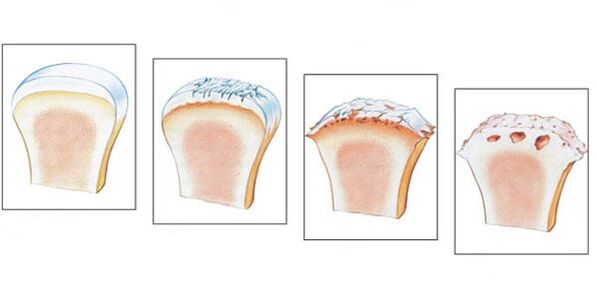
In the absence of treatment, the pathology progresses, and during its course remissions are replaced by relapses, and the frequency of exacerbations continuously increases.Stiffness in movements in the morning now does not disappear for a long time, it becomes permanent.
When examining a patient with grade 1 arthrosis, the doctor notes only slight swelling of the joint and complete preservation of mobility.In grade 2 pathology, palpation reveals pain and mild deformity.In the area of the joint space, the formation of bone thickening is observed.
Osteoarthritis is characterized by the development of synovitis - inflammatory processes in the synovial membranes of the hip, knee, ankle and shoulder joints.Their main symptom is the formation of a rounded seal in the joint area, when pressure is applied on which the movement of the fluid (fluctuation) is felt.Acute synovitis may be accompanied by an increase in temperature up to 37-38 °C, headache and digestive disorders.
Diagnostics
The diagnosis is made based on the results of instrumental studies, characteristics of the clinical picture, anamnesis and complaints of patients.A general blood and urine test is not very informative: all values remain within normal limits if arthrosis is not caused by a metabolic pathology.With the development of synovitis, the erythrocyte sedimentation rate increases (30 mm/hour) and the level of leukocytes and fibrinogen in the blood increases.This indicates an acute or chronic inflammatory process occurring in the body.Changes in biochemical and immunological parameters occur in secondary forms of osteoarthritis.
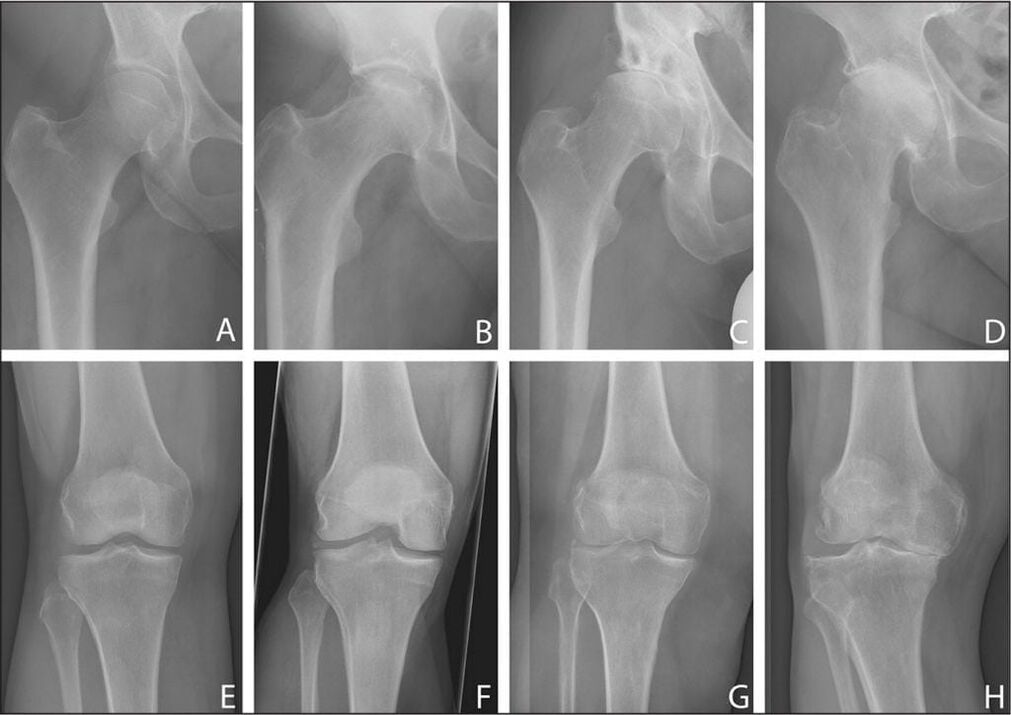
The most informative method for diagnosing degenerative-dystrophic pathology is x-ray in frontal and lateral projection.
| Stages of osteoarthritis according to the Kellgren-Lawrence classification (1957) | Radiographic signs of pathology |
|---|---|
| Initial | No radiological signs |
| First | Indistinct and irregular narrowing of the joint space.Slight flattening of the edges of the bone plates, formation of initial osteophytes or their absence |
| Second | Noticeable narrowing of the joint space, 2-3 times higher than normal, formation of a large number of osteophytes, subchondral osteosclerosis.The appearance of cystic clearings in the epiphyses |
| Third | The appearance of pronounced subchondral osteosclerosis and large marginal osteophytes, significant narrowing of the joint space |
| Fourth | Formation of coarse and massive osteophytes, almost complete fusion of the joint space, deformation and compaction of the epiphyses of the bones that form the joint |
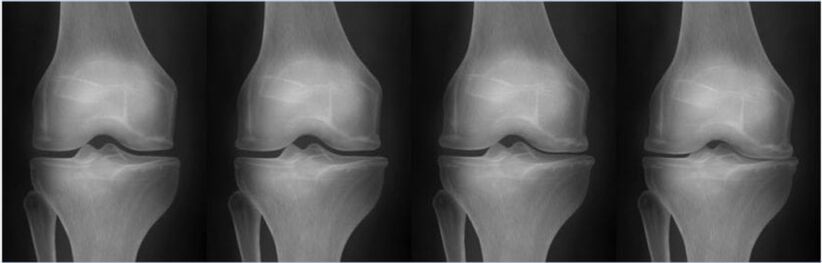
If, after studying the x-ray images, the doctor has doubts about the diagnosis, a CT scan is prescribed.And to evaluate the condition of the connective tissue structures located near the joint, an MRI is performed.When using contrast, it is possible to dynamically evaluate the blood supply to the tissues and establish the stage of the inflammatory process during the development of synovitis.
Basic therapy methods
Osteoarthritis is still an incurable disease, since there are no pharmacological drugs for the regeneration of cartilage tissue.The main objective of therapy is to prevent the progression of the disease and maintain joint mobility.Treatment is long-term, complex and uses both local and systemic drugs.Patients should avoid strong stress on the joint and, if necessary, limit the range of motion with orthopedic devices - orthoses, elastic bandages.Overweight patients need to make changes to their diet to gradually reduce body weight and follow a diet.
After achieving stable remission, patients are shown daily physiotherapy exercises.The first training sessions are carried out under the guidance of a physiotherapist doctor, then the patient performs a set of exercises at home.Physical therapy can be supplemented with swimming, yoga, and cycling.
To reduce the severity of pain, drugs of various clinical and pharmacological groups are prescribed:
- nonsteroidal anti-inflammatory drugs in the form of ointments, tablets, solutions for parenteral administration with active ingredients;
- injections into the joint of anesthetic solutions in combination with glucocorticosteroids;
- muscle relaxants to eliminate muscle spasms and restrictive contractures.
Treatment regimens include B vitamins, sedatives and, if necessary, tranquilizers and antidepressants.Chondroprotectors are necessary for long-term use.This is the only group of drugs that have the ability to partially restore cartilage tissue.
To increase their clinical activity, physiotherapeutic procedures are performed: laser therapy, magnetic fields, UHF therapy.
Any pain in the joints should be a signal for immediate consultation with a doctor.Therapy carried out in the initial stage of osteoarthritis will stop the destruction of the cartilage and avoid loss of performance and disability.